
10 ingredient-specific oral strip concepts
Reference specifications supplied for B2B feasibility review. Listed amounts are target content per strip, not recommended doses, verified finished-product results or confirmation of approval. NAD+ is a coenzyme and is included as a related specialty-film concept.
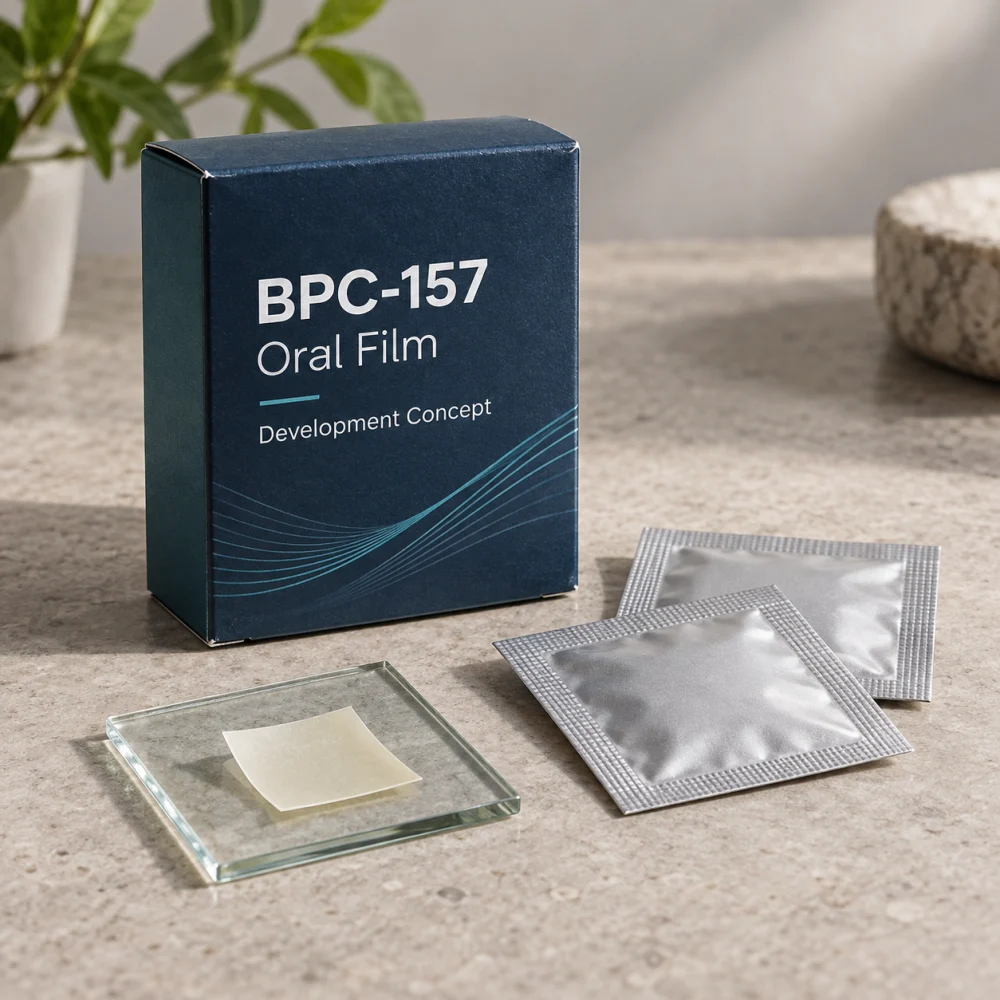
BPC-157 Oral Strips
500 mcg per strip Reference specification
Confirm the exact BPC-157 material identity, counterion and analytical specification before assessing the proposed film. The 500 mcg reference is a development brief, not a validated clinical dose or permission for consumer sale.
Specification & project review →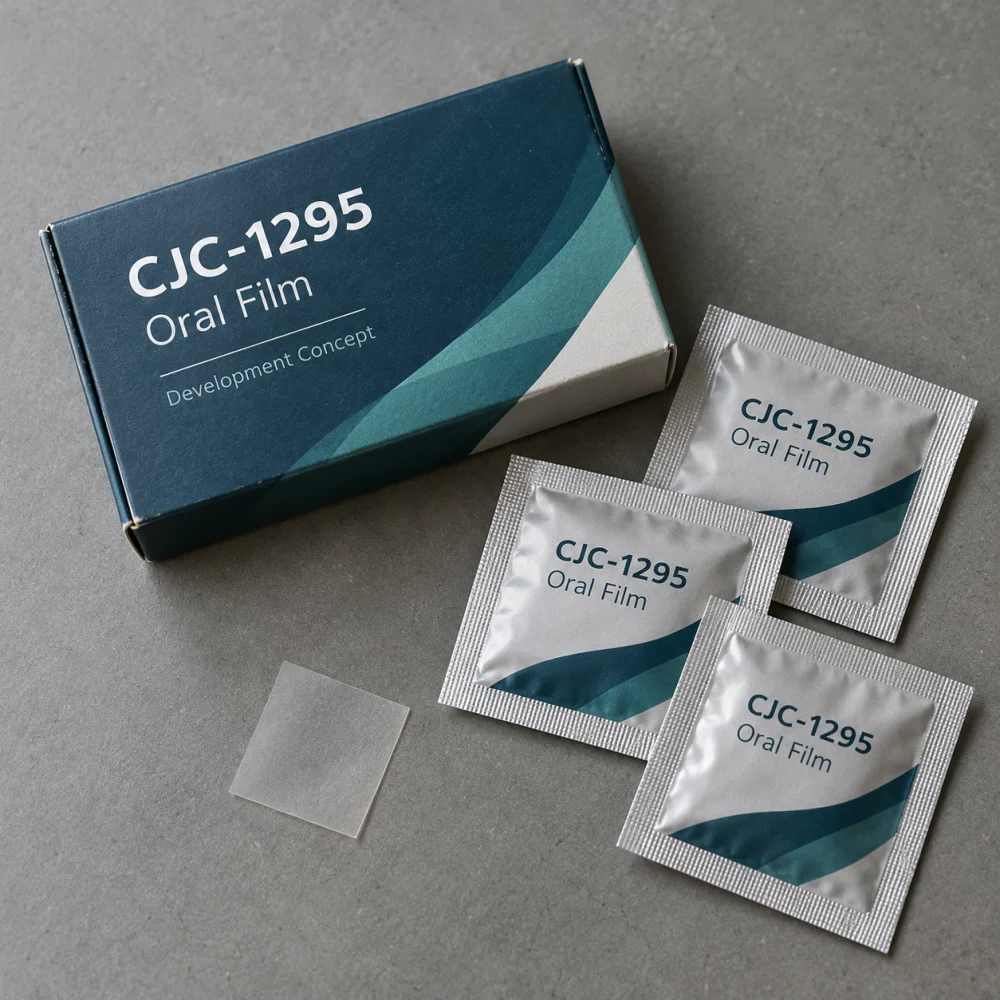
CJC-1295 Oral Strips
150 mcg per strip Reference specification
This is a single-ingredient CJC-1295 concept at 150 mcg, not the existing CJC-1295 + Ipamorelin blend. Confirm whether the requested material includes DAC, its precise identity and the lawful development pathway.
Specification & project review →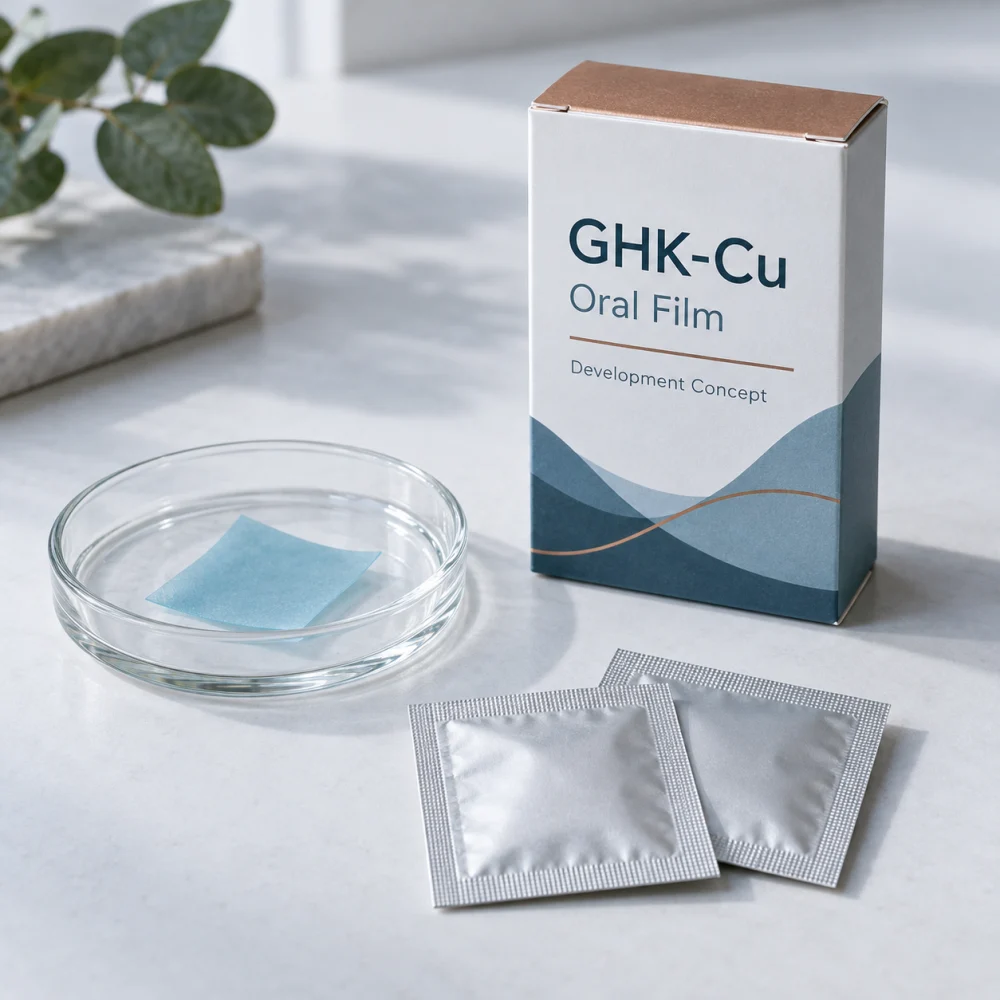
GHK-Cu Oral Strips
3 mg per strip Reference specification
The 3 mg reference describes GHK-Cu material per film, not 3 mg of elemental copper. Identity, copper content, compatibility, appearance and packaged stability require specification-level review; oral-use eligibility is not inferred from cosmetic use.
Specification & project review →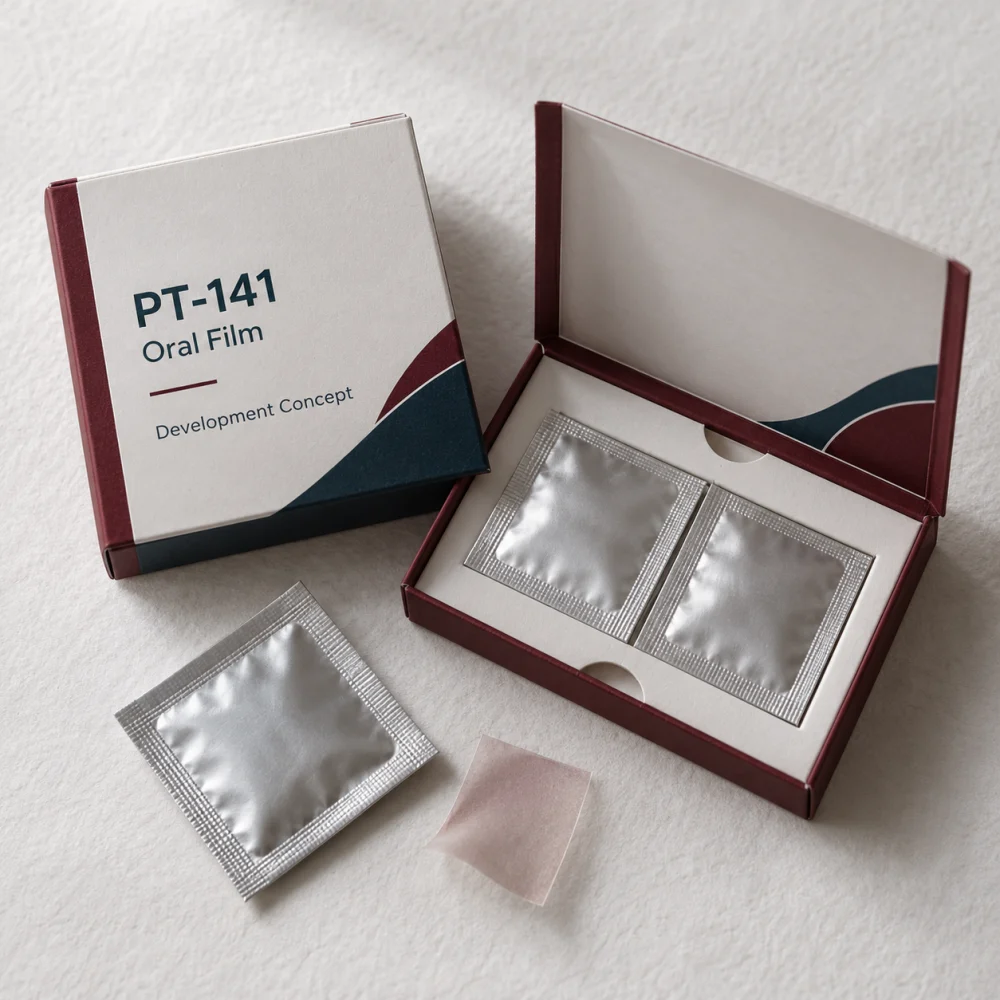
PT-141 Oral Strips
2 mg per strip Reference specification
This 2 mg PT-141 concept is distinct from PT-141+ blends containing other actives. Approval or evidence for another dosage form does not authorize an oral film or establish equivalent exposure.
Specification & project review →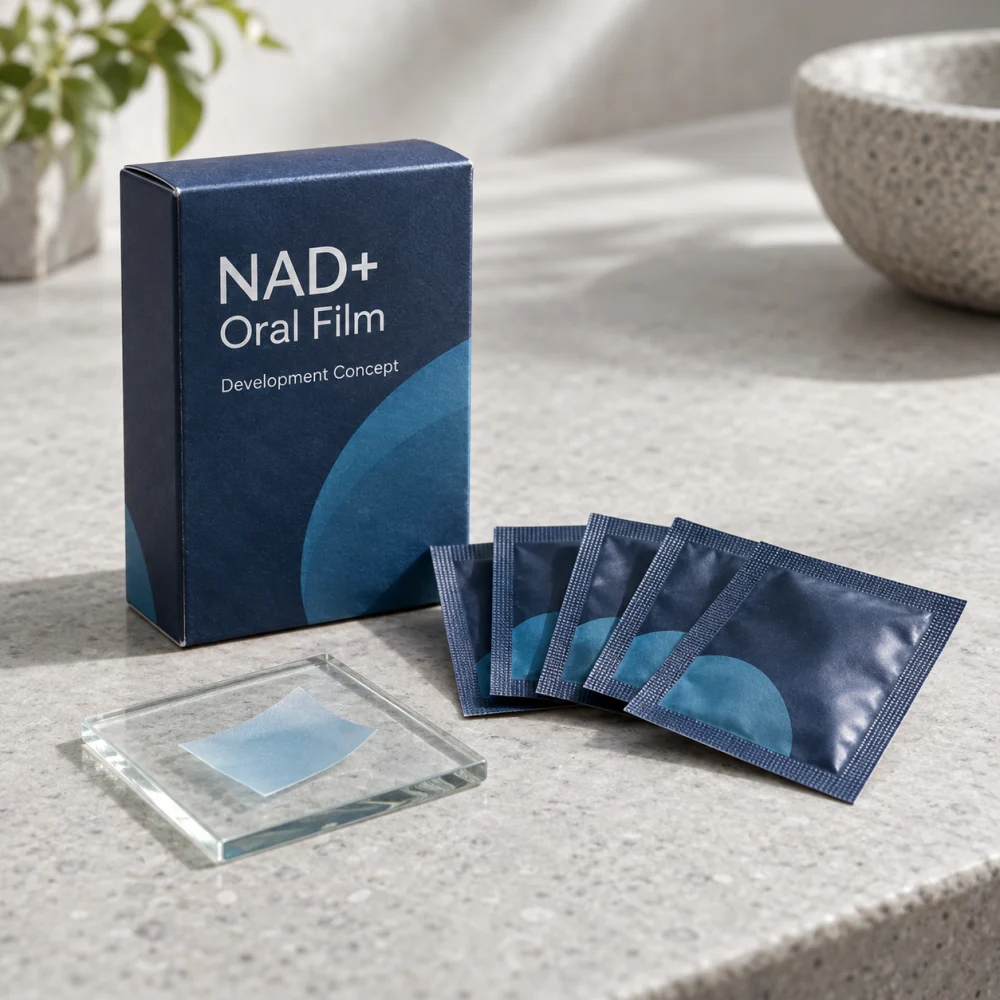
NAD+ Oral Strips
100 mg per strip Reference specification
NAD+ is a coenzyme rather than a peptide. This 100 mg concept remains in the specialty oral-film collection for buyer convenience. Loading, film handling and stability need verification; no increase in systemic NAD+ is promised.
Specification & project review →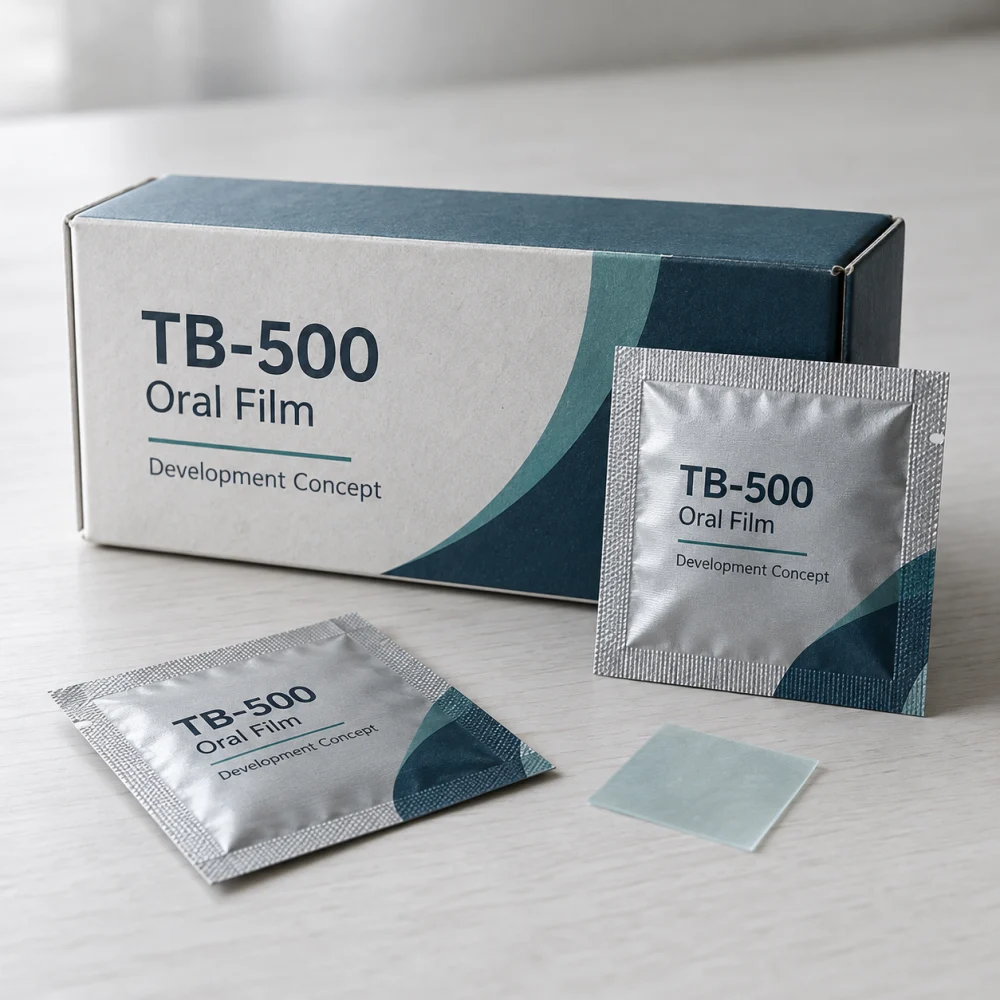
TB-500 Oral Strips
500 mcg per strip Reference specification
TB-500 naming alone is insufficient to specify the material. Confirm the exact sequence, molecular identity and source documents rather than assuming it is interchangeable with full-length thymosin beta-4. No injury-recovery claim is made.
Specification & project review →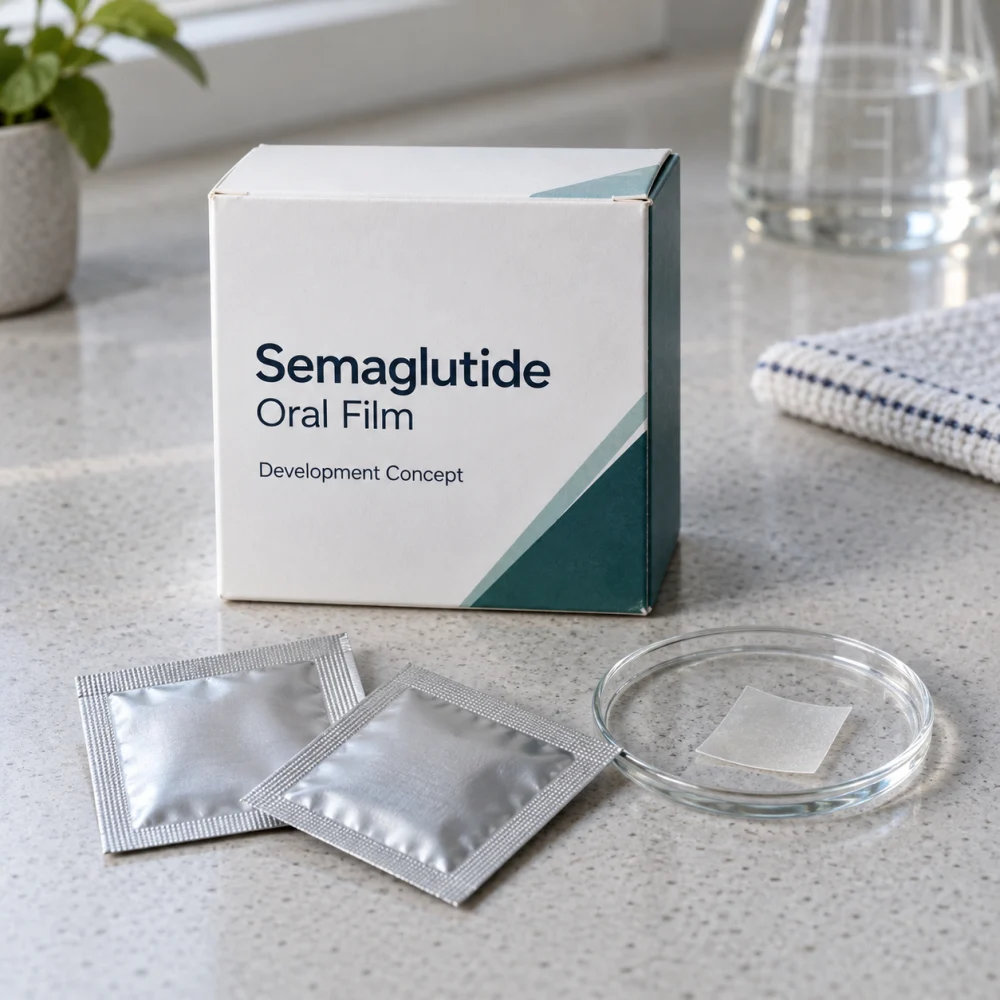
Semaglutide Oral Strips
2 mg per strip Reference specification
Semaglutide oral-film enquiries require a documented pharmaceutical pathway and appropriately authorized parties. The proposed 2 mg film is not presented as an approved medicine or as equivalent to an approved semaglutide product.
Specification & project review →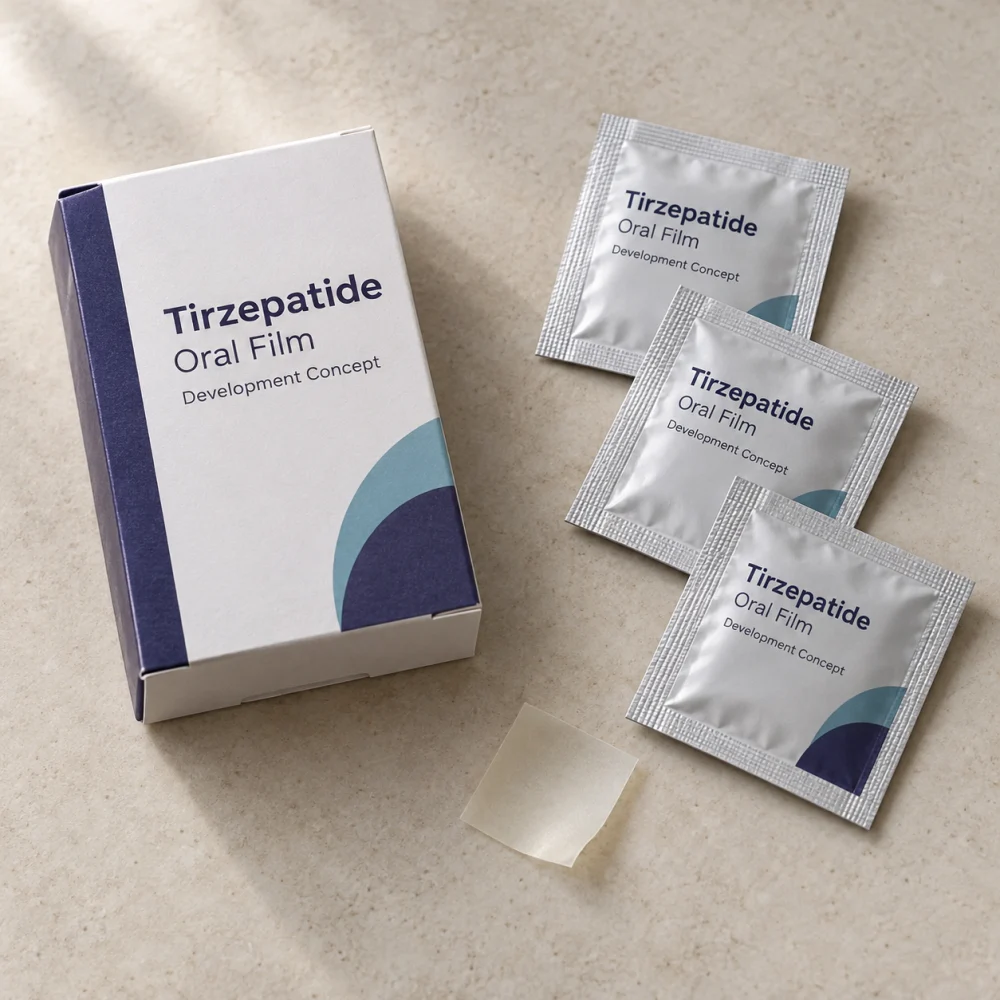
Tirzepatide Oral Strips
2 mg per strip Reference specification
A tirzepatide oral film is not interchangeable with an approved dosage form. This 2 mg reference is for qualified development review only; commercial availability depends on authorization for the exact formulation, route and destination market.
Specification & project review →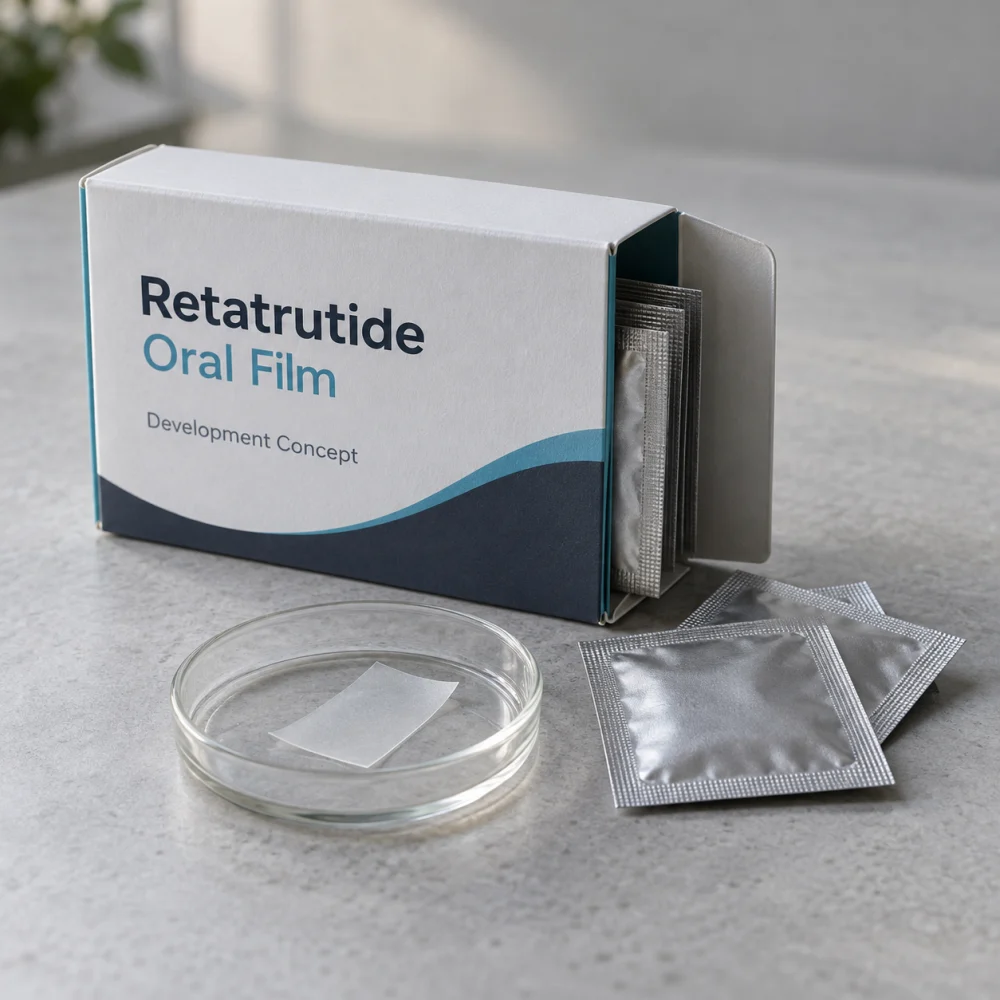
Retatrutide Oral Strips
2 mg per strip Reference specification
Retatrutide requires explicit investigational and jurisdiction-specific regulatory assessment. This 2 mg concept is not offered as a consumer weight-management product, approved oral medicine or a substitute for a prescribed treatment.
Specification & project review →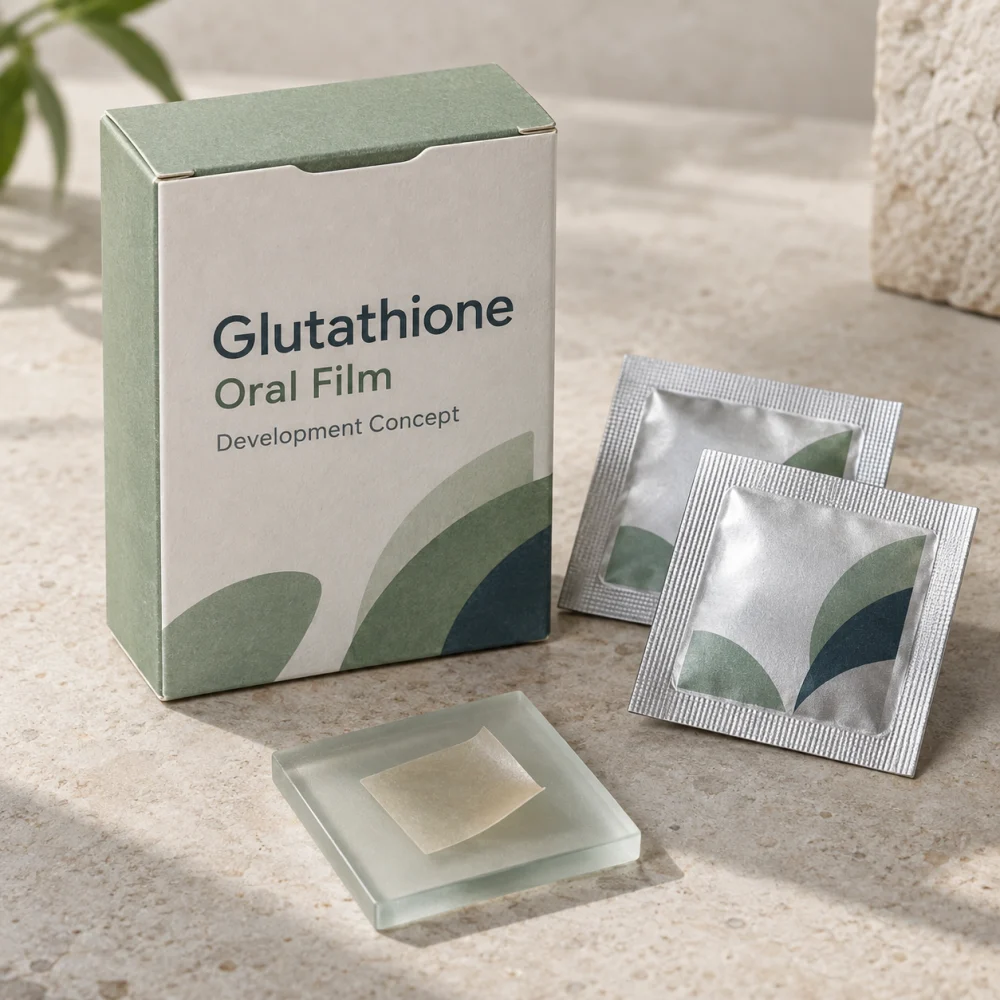
Glutathione Oral Strips
100 mg per strip Reference specification
This reference is 100 mg glutathione per film, separate from the existing 80 mg glutathione + 20 mg NAC blend. Confirm the requested chemical form, assay, impurity specification and permitted intended use before prototype acceptance.
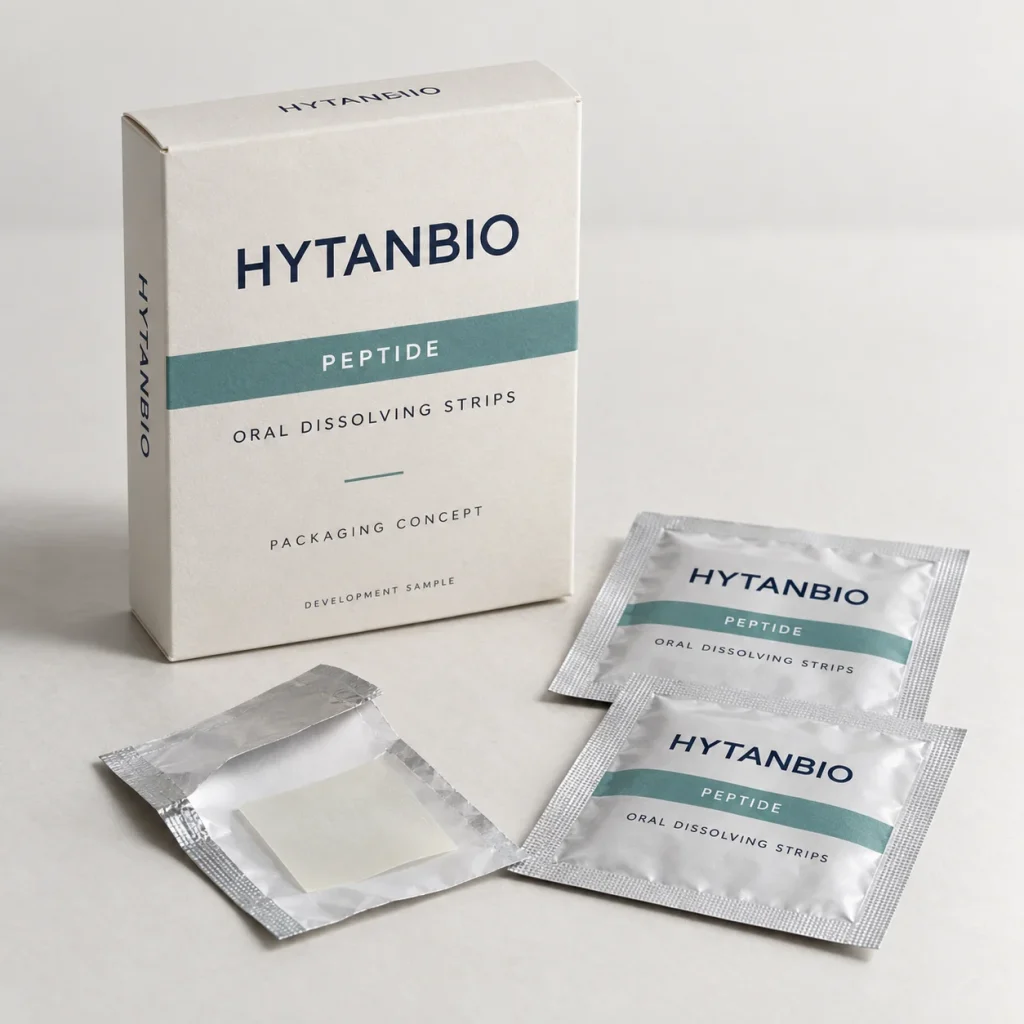
Specification & project review →Original AI-generated packaging concepts for OEM discussion, not photographs of approved or stocked commercial products.
What Are Peptide Oral Strips?
Peptide oral strips are thin polymer films that carry a specified ingredient system and disintegrate after placement in the mouth. Depending on the formulation and instructions for use, a product may be described as an oral dissolving film, or it may require a specifically designed and evidenced buccal or sublingual delivery pathway.
This distinction matters. Rapid disintegration describes how the film breaks down; it does not, by itself, prove mucosal absorption, systemic bioavailability or equivalence to an injection, tablet or approved medicine. Those outcomes require ingredient-specific formulation work, suitable studies and the correct regulatory pathway.
Suitable starting point
- A defined peptide name, sequence and raw-material specification
- A realistic target amount per strip
- A clear market and product classification
- An intended positioning that can be legally supported
- A packaging and shelf-life objective
Why Brands Explore the Oral Film Format
Needle-free product experience
A compact strip can provide a non-injectable, easy-to-carry format. This is a presentation and usability advantage; it should not be converted into an absorption or efficacy claim without finished-product evidence.
Pre-portioned presentation
Each film can be cut to a defined size and individually packed. Dose uniformity still depends on mixing, coating-weight, drying and slitting controls and must be verified analytically.
Portable single-dose packaging
High-barrier sachets can support travel-friendly use while protecting moisture-sensitive films. Sachet material and seal integrity are selected around the formulation and stability data.
Differentiated brand platform
Film color, flavor, dimensions, pack count and outer-box design can create a distinctive line extension for qualified wellness, beauty or research-market concepts.
Peptide Concept Families for Feasibility Screening
There is no universal “peptide strip formula.” Peptides differ materially in molecular size, solubility, purity profile, counterions, oxidation or hydrolysis sensitivity, effective amount and legal status. We screen the exact commercial material rather than relying only on a marketing ingredient name.
Dietary and beauty-oriented concepts
Collagen-derived peptides, glutathione-related concepts and other food- or supplement-positioned materials may be considered where ingredient identity, amount, route and local eligibility are supportable. High gram-level materials are usually a poor fit for a thin film and may need a multi-strip serving or another dosage form.
GHK-Cu and specialty beauty concepts
Copper peptide and beauty-positioned programs require market-specific ingredient and claims review. Raw-material purity, copper content, color, taste, compatibility and stability must be evaluated in the proposed film system.
Research or drug-pathway peptides
BPC-157, CJC-1295, ipamorelin, PT-141, thymosin alpha-1, MOTS-c, DSIP, Semax, Selank and similar materials are not automatically eligible as foods or dietary supplements. Projects involving these names require a documented legal and regulatory pathway; we do not present them as ordinary wellness private-label products.
GLP-1 and prescription-drug concepts
Semaglutide, tirzepatide and other GLP-1-related ingredients must not be marketed as casual oral-strip “alternatives” to approved medicines. Drug identity, route, manufacturing authorization, clinical evidence and jurisdiction-specific approval determine whether any such program is lawful.
Custom Peptide Strip Development Options
Ingredient and specification review
Sequence, molecular weight, salt or counterion, assay, purity, impurity profile, residual solvents, microbiological limits, source documentation and storage conditions are reviewed before formulation.
Film and loading design
Target amount, film dimensions, polymer system, plasticizer, pH, dispersion strategy, coating weight and thickness are balanced against film strength and consumer experience.
Taste and mouthfeel engineering
Flavor, sweetness, bitterness control, texture, tack, residue and disintegration target are optimized using representative material. Flavor systems are screened for compatibility rather than selected by name alone.
Analytical method planning
Identity and assay methods, sample preparation, specificity, content uniformity and degradation monitoring are planned around the peptide and finished film matrix.
Barrier packaging
Individual foil sachets, 10/20/30-count cartons, printed artwork, desiccant strategy and secondary packaging can be developed around moisture, oxygen, light and transport risks.
Scale-up and quality controls
Mixing, deaeration, coating, drying, slitting, cutting and pouch sealing parameters are translated from laboratory samples into controlled commercial-batch instructions.
From Product Brief to Commercial Batch
Confidential brief
Target market, ingredient specification, amount per strip, intended positioning, flavor, pack count, forecast and launch timing.
Feasibility and regulatory screen
Technical fit, classification, claims boundary, raw-material documents and analytical requirements are reviewed before quotation.
Prototype formulation
Film-forming system, dispersion, taste, appearance and disintegration are developed with representative ingredient material.
Sample evaluation
The agreed prototype is assessed for appearance, dimensions, weight, handling, sensory profile, disintegration and preliminary assay where applicable.
Packaging and stability plan
Barrier sachet, seal parameters, artwork and real-time or accelerated stability protocol are matched to the product risk profile.
Pilot and scale-up
Approved specifications, in-process controls, batch records and release testing support progression toward commercial production.
Quality Evidence a Professional Buyer Should Request
A polished sample is not enough to qualify a peptide ODF program. The evidence package should be proportional to the ingredient, market and claim risk. Typical controls can include:
- Raw-material identity, assay, purity and impurity profile
- Supplier qualification, traceability and storage records
- Blend and finished-film content uniformity
- Film weight, thickness, dimensions and appearance
- Disintegration test with a defined method and acceptance criterion
- Moisture content or water activity where relevant
- Microbiological limits and contaminant testing
- Sachet seal integrity and packaged-product stability
Evidence before claims
Terms such as “high absorption,” “high bioavailability,” “fast acting,” “healing,” “fat loss” or “anti-aging” should not be inferred from the dosage form. A responsible launch connects every material product claim to the applicable law and an appropriate evidence file.
Format, Flavor and Packaging Choices
Film configuration
Rectangle or custom-proportioned films, dimensions and thickness designed around loading, handling and disintegration. Transparent, translucent or colored appearance is possible where ingredient color and stability allow.
Sensory direction
Mint, citrus, berry and other flavor directions can be screened. Sweetener system, cooling effect, bitterness, aftertaste and mouth residue are developed as one sensory architecture.
Label attributes
Sugar-free, vegan, allergen-conscious or similar attributes are available only when the complete ingredient system, facility controls and destination-market definition support the statement.
Retail presentation
Individual high-barrier sachets, branded cartons, multipacks and sample kits can be configured. Printed packaging minimums may differ from film-production minimums.
What Determines Feasibility, MOQ and Timeline?
Minimum order quantity and development time are not determined by peptide name alone. Important variables include target loading, solubility or dispersion behavior, raw-material availability, analytical method readiness, sensitivity to water and heat, flavor complexity, printed-sachet minimums, destination-market documentation and the amount of stability evidence needed. A low-dose, well-characterized material with an established method may progress more efficiently than a high-loading or poorly documented blend.
For a useful first review, provide the raw-material COA and specification, proposed amount per strip, country of sale, target consumer, intended label statements, daily serving, flavor direction, sachet and carton count, forecast volume and desired launch date. We will identify critical gaps before sampling so technical and commercial expectations remain aligned.
Peptide Oral Strips FAQ
Are all oral dissolving strips sublingual?
No. An ODF may simply disintegrate in the mouth and be swallowed. “Sublingual” or “buccal” describes a specific route and should be supported by product design, instructions, evidence and the applicable regulatory pathway.
Does fast disintegration prove better absorption?
No. Disintegration and absorption are different performance questions. Bioavailability depends on the ingredient, formulation, residence time, permeability, dose and study design.
Can BPC-157 or CJC-1295 be sold as a supplement strip?
Not automatically. These and similar peptides may raise drug, unapproved-ingredient or research-use issues. Eligibility must be determined for the exact market, route, claims and commercial model before development.
Can you make semaglutide or tirzepatide oral strips?
These are prescription-drug-related ingredients, not ordinary private-label wellness actives. Any legitimate program would require the appropriate pharmaceutical authorization, evidence and regulatory pathway.
What peptide amount can fit in one strip?
There is no universal maximum. Practical loading depends on potency, material bulk, solubility or dispersion, taste, film area, thickness, strength and uniformity. Feasibility testing is required.
Can the flavor and film appearance be customized?
Yes, within compatibility and stability limits. Ingredient taste and color may constrain the final result, so customization is confirmed with representative raw material.
What packaging is recommended?
Most moisture-sensitive oral films use individual high-barrier sachets. The final laminate, seal and carton are selected using product and stability data, not appearance alone.
How quickly can samples be made?
Timing depends on material documentation and availability, regulatory screening, analytical needs and formulation difficulty. We provide a project-specific sampling plan after feasibility review.
Peptide ODF Knowledge Center
Use these technical guides to prepare a clearer RFQ and evaluate claims before committing to a commercial formula:
Peptide Oral Strips: Feasibility Overview
A practical framework for evaluating format fit, evidence and responsible positioning.
How Do Oral Peptide Strips Work?
Understand the difference between film disintegration, mucosal delivery and systemic exposure.
Stable Peptide ODF Formulation
Key variables affecting peptide integrity, film performance and shelf-life planning.
Peptide Strip Taste Masking
How flavor, sweetness, polymer choice and aftertaste control work together.
Peptide Oral Strip Manufacturing Process
From controlled mixing and coating through drying, cutting and sachet sealing.
Disintegration Time Testing
Why a defined method and acceptance criterion matter more than a vague “fast” claim.
Request a Peptide Strip Feasibility Review
Send your peptide specification, COA, target amount per strip, intended market, proposed claims, daily serving, preferred flavor, pack count and forecast. Our team will review technical fit, documentation gaps, regulatory pathway, analytical controls, packaging needs and a realistic route to prototype.
Discuss Your Peptide ODF Project
Related concepts from the HYTAN BIO TECH portfolio
The updated brochure adds the following ingredient-led options to this category. Use the reference codes to request a formula discussion. Inclusion is a development direction, not evidence of finished-product availability, clinical performance or approval in your market. The nutritional peptide references here do not establish eligibility for unrelated research or prescription peptides.
| Reference | Oral film concept | Ingredients in the brochure |
|---|---|---|
| A1p. 10 | Collagen Peptide, Vitamin C & Zinc | Collagen peptides, Vitamin C, Zinc |
| A4p. 10 | Carnosine & OPC | Carnosine, OPC (proanthocyanidins) |
Ingredient lists are starting points for OEM/ODM discussions. They do not establish an effective dose, clinical outcome or market authorization. Final loading, strip size, disintegration, sensory acceptance, assay, uniformity, stability and packaging must be validated. High-load minerals, collagen, amino acids and creatine may not fit a practical single strip at a conventional serving size. Children, pregnancy and prescription-drug projects require separate suitability and regulatory review.